Pay in installments of $7.38 with
 ,
,
 and
and

Shipping Estimate
USA
- USA
- CAN
- USA
- CAN
Ships within 48 hours · Estimated delivery Jul 1 - Jul 6
 Promo Codes Available:
For Your Every Summer RSVP, with Code: SUMMER15
Description
philodendron imperial green size Philodendron 'Imperial Green' – Foliage FactoryPhilodendron 'Imperial Green' Philodendron 'Imperial Green' is a self heading Philodendron with large glossy green leaves and a defined central stem. It develops as a leafy rosette and usually needs no pole support. As it matures, the plant becomes broader through leaf size, petiole spread and layered green growth. The foliage is smooth, oval to broadly lance shaped and held on sturdy petioles. New leaves open fresh green, then harden into a richer
Philodendron 'Imperial Green'
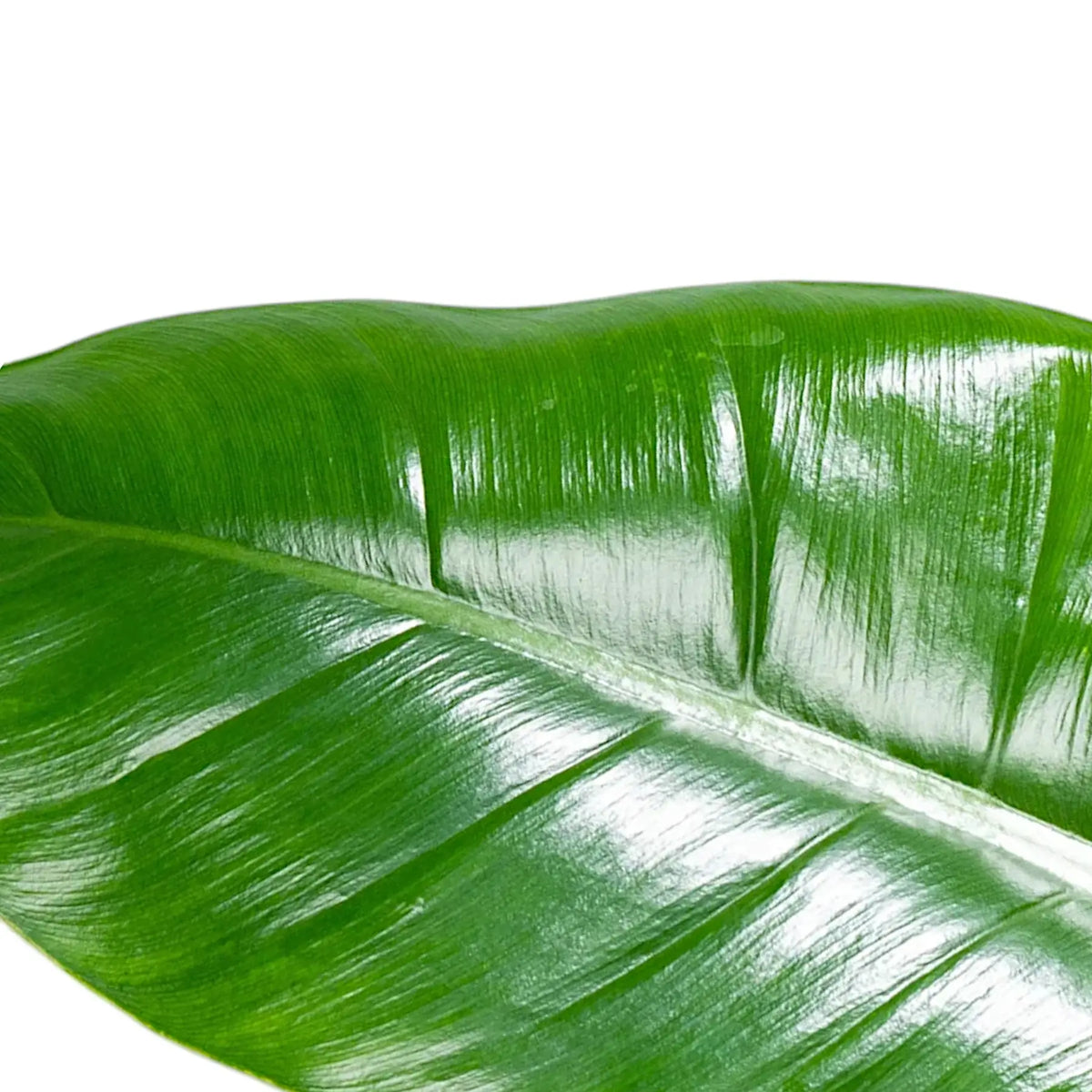
Philodendron 'Imperial Green' is a self-heading Philodendron with large glossy green leaves and a defined central stem. It develops as a leafy rosette and usually needs no pole support. As it matures, the plant becomes broader through leaf size, petiole spread and layered green growth.
The foliage is smooth, oval to broadly lance-shaped and held on sturdy petioles. New leaves open fresh green, then harden into a richer mature tone. The leaves are arranged around a central stem, so pot stability, drainage and correct planting depth are important.
Large green rosette traits
- Growth habit: Self-heading Philodendron with a defined central stem and no climbing requirement.
- Leaf size: Broad, glossy green leaves that become larger as the plant matures.
- Plant shape: Outward-spreading foliage with a full mature width.
- Support needs: Usually grown without a pole; a stable pot matters more than vertical support.
- Indoor behaviour: Responds well to bright indirect light, warm temperatures and a chunky root zone.
Central stem, petiole spread and pot balance
Philodendron 'Imperial Green' grows from a central stem with leaves emerging in sequence. The petioles hold the blades outward, so the plant gradually takes up more horizontal space. Mature leaves can become heavy, and a lightweight nursery pot may tip once the plant has filled out. A cachepot or heavier outer pot can help balance the plant without disturbing the roots.
The base should sit at the same level it was grown in the nursery pot. Burying the lower stem under extra mix can trap moisture and encourage rot. The plant’s root system needs both moisture and oxygen, so dense soil is a common reason for yellowing leaves, stalled growth and soft lower tissue.
Philodendron 'Imperial Green' develops a balanced mature shape through steady leaf production and broad petiole spread. Older leaves create the lower width, while newer leaves rise from the centre and keep the plant visually full. Good light from more than one side, or regular rotation, helps the plant stay balanced as the leaf mass increases.
Care for a large self-heading Philodendron
- Light: Bright indirect light gives the best leaf size and balanced growth. Strong direct sun can scorch the glossy surface.
- Watering: Water when the upper few centimetres of the mix are dry. The root ball should be evenly moistened, then allowed to drain fully.
- Substrate: Choose a chunky, well-aerated aroid mix. Bark, pumice, perlite and coco fibre help prevent the mix from collapsing around the roots.
- Temperature: Keep above 18°C for active growth. Cold wet substrate is more damaging than a short dry spell.
- Humidity: Moderate humidity supports cleaner leaf expansion. A humidifier can help in very dry indoor air.
- Feeding: Feed lightly during active growth. Large leaves need nutrients, but overfeeding can brown the tips.
- Pot stability: Use a pot with drainage and enough weight to support the mature leaf spread.
- Repotting: Repot into the next size up once roots fill the container. Avoid jumping into a pot that holds too much wet mix.
Growth and root-zone warning signs
- Yellowing leaves: Usually linked to overwatering, compacted substrate or low light. Check root condition and drainage before changing the watering schedule.
- Soft stem base: A warning sign of excess moisture around the central stem. Remove wet old leaf bases and inspect the root ball.
- Brown leaf edges: Can follow irregular watering, low humidity, salt build-up or root stress. Flush the substrate if fertiliser residue is likely.
- Leaning plant: Rotate the pot and check whether the plant has become top-heavy. Repotting or a heavier outer pot may be needed.
- Small new leaves: Often linked to weak light, depleted substrate or a restricted root system.
Philodendron 'Imperial Green' is easier to maintain when the root zone is checked by touch rather than watered on a fixed calendar. Its thick leaves can hide stress for a while, so slow growth, yellowing or a dull leaf surface should trigger a root and light check before symptoms spread.
Safety and handling
Philodendron 'Imperial Green' is not pet-safe. Like other Philodendron, it contains insoluble calcium oxalate crystals that can irritate the mouth and digestive tract if ingested. The sap may irritate skin, especially after pruning or removing damaged leaves.
DeCoster origin and Philodendron name
Philodendron is an accepted genus in Araceae. Its name comes from Greek elements meaning “loving” and “tree”, a reference to the way many species grow in contact with trees in tropical American habitats. Philodendron 'Imperial Green' was selected by Paul DeCoster in Melle, Belgium, from Bamboo Nursery seedlings of unknown parentage.
Philodendron 'Imperial Green' develops large glossy green leaves on a freestanding self-heading plant with a broad mature spread.
Shipping Notes
- Free Standard Shipping on $100+ Orders to the USA.
- Except Preorder products are shipped in 48 hours.
- Delivery to the USA:
- Standard Shipping : 3-10 business days
- If time is of the essence, please consider selecting expedited delivery for faster service.
Exchange/Return Notes
- We offer a 30-day return/exchange service after receiving.
- Final sale items are not eligible for returns or exchanges.
- To process your return/exchange, please contact us at [email protected]
- Please click here for more details>>> Return & Exchange Policy